

Meet the Black Hole Photography Team





Eszter Polonyi is a historian of art, media, and science working on the interdisciplinary project sponsored by the Slovenian National Research Agency “The Photo of a Black Hole: Physics meets Photography” at FMF UL (2025-7). Eszter researches the history of epistemic images, or knowledge derived through visual means. eszter.polonyi@fmf.uni-lj.si
Eszter Polonyi is a historian of art, media, and science working on the interdisciplinary project sponsored by the Slovenian National Research Agency “The Photo of a Black Hole: Physics meets Photography” (ARIS J7-60121, 2025-2027). She migrated from New York to Slovenia in 2020 and has since been researching, teaching, and managing state- and EU-level projects in the fields of art theory, art and science studies, and the history of film and photography at a range of institutions in the Adriatic. University of Nova Gorica, Assistant Professor in Cultural History, Rector’s Cabinet (2022-4), Research Center for the Humanities and School for Humanities (2020-22). Museum of Modern Art, Ljubljana and Museum of Contemporary Art, Metelkova, curator (2023-23). Pratt Institute, Visiting Assistant Professor History of Art and Design Department (2017-20). Columbia University, Core Curriculum Lecturer (2017-20). Eszter received her PhD in the History of Art from Columbia University (2017), MPhil (2011), MA (2009), an MA from the Courtauld Institute Of Art (2006), and her BA from Wellesley College. Her research has been supported by the Slovenian National Research Agency, COST, the Mellon foundation, SSRC DPDF, Pepsico, DAAD, AHRC (UK), the Hungarian Ministry of Education, Pell Grant, and several other private funding agencies for the arts.

Sašo Grozdanov je izredni profesor za fiziko na Fakulteti za matematiko in fiziko Univerze v Ljubljani ter član fakultete in sodelavec Ernest Rutherford na Higgsovem centru za teoretsko fiziko Univerze v Edinburgu. Diplomiral je na Univerzi Harvard, magistriral na Univerzi Cambridge in doktoriral na Univerzi Oxford.
Sašo Grozdanov is an associate professor of physics at the Faculty of Mathematics and Physics at the University of Ljubljana and at the Higgs Center for Theoretical Physics at the University of Edinburgh. He received his BA from Harvard University, his MA from Cambridge University and his PhD from Oxford University. After his studies, he worked as a postdoctoral researcher at the University of Leiden and the Massachusetts Institute of Technology. His broad interest is to discover the laws that govern physics using theoretical and mathematical methods ranging from low to high energies: from hydrodynamics to quantum field theory, gravity and black holes, and string theory. His work has focused heavily on studying the dynamics of hot collective states that behave like liquids and plasmas. An example of such a state is the quark-gluon plasma that filled the early universe and can now be created in particle accelerators.


Assistance with the thematic and visual preparation of interdisciplinary physics-photography exhibitions

Visual conception
Zsuzsanna Szegedi-Varga is a doctoral student at the Interdisciplinary Doctoral Programme in Environmental Protection at the University of Ljubljana. She received her MFA in Studio Art and Critical Theory from the School of the Art Institute of Chicago, Low Residency Program, mentor Gregg Bordowitz. Working between Eastern Europe and North America, Szegedi-Varga approaches art as research and technological critique, using her practice to examine how visibility is organized and how its limits can be studied through what is missing. https://zsuzsanna.com/

Programming
Jaka Železnikar is an author, poet, and programmer whose work spans diverse forms of language-based and digital art. Active since 1994, he is recognized as one of the pioneers of Slovene and international net art and online electronic literature. Železnikar’s work has been widely published and exhibited, contributing significantly to the development of digital literary and artistic practices. https://jaka.org/
INTERIM ARTS RESEARCH AND CURATORIAL PROJECT MANAGEMENT
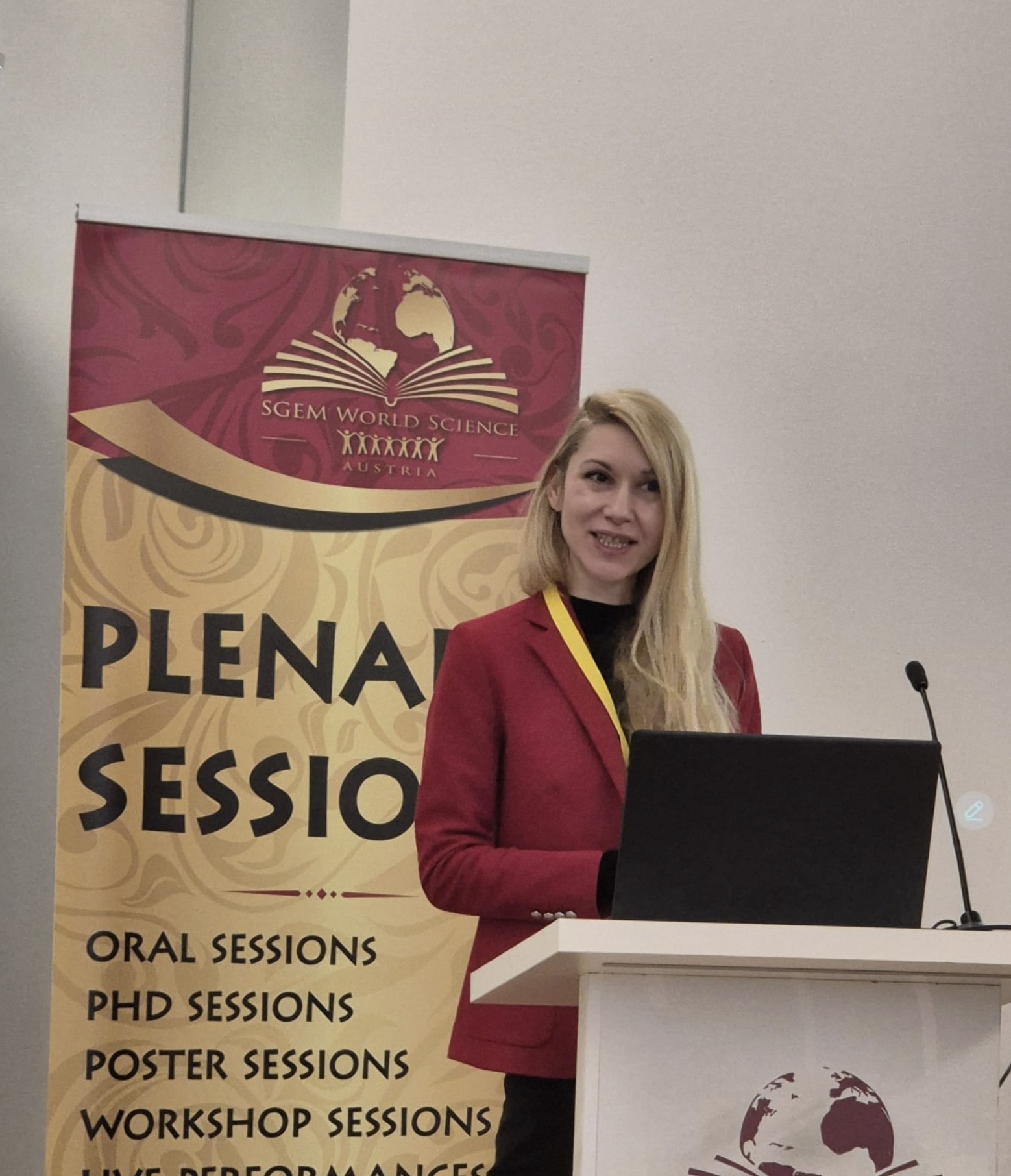
Magdalena Germek is a philosopher, researcher in visual epistemology, and Assistant Professor of Art Theory at the Academy of Fine Arts and Design, University of Ljubljana. Her research lies at the intersection of philosophy, visual epistemology, art theory and history, and visual literacy, with a particular interest in the relations between images, knowledge, and scientific practices. More broadly, she examines how visualisation participates in the constitution of scientific objects and in the production of knowledge across different historical and technological regimes of seeing. Her current work explores anatomical and medical images as one case within this broader inquiry, tracing transformations of scientific visibility from early modern representation to contemporary medical imaging. She is a researcher in the ARIS programme Visual Literacy at UL ALUO and teaches Visual Epistemology at the Postgraduate School ZRC SAZU.
Alongside her academic work, she develops research-led artistic projects in theatre and performance, working as an author, dramaturg, and philosopher-narrator in interdisciplinary formats that bring philosophical research into dialogue with music and the performing arts. She regularly presents her research at international conferences across Europe, including in Vienna, Florence, Venice, Copenhagen, Graz, and Budapest. She is the author of the scholarly monograph Dialektika formalizacije (The Dialectic of Formalization, Krtina, Ljubljana, 2025). Within the Black Hole Photography project, she extends these questions to astronomical images and to scientific objects whose visibility is technologically mediated.
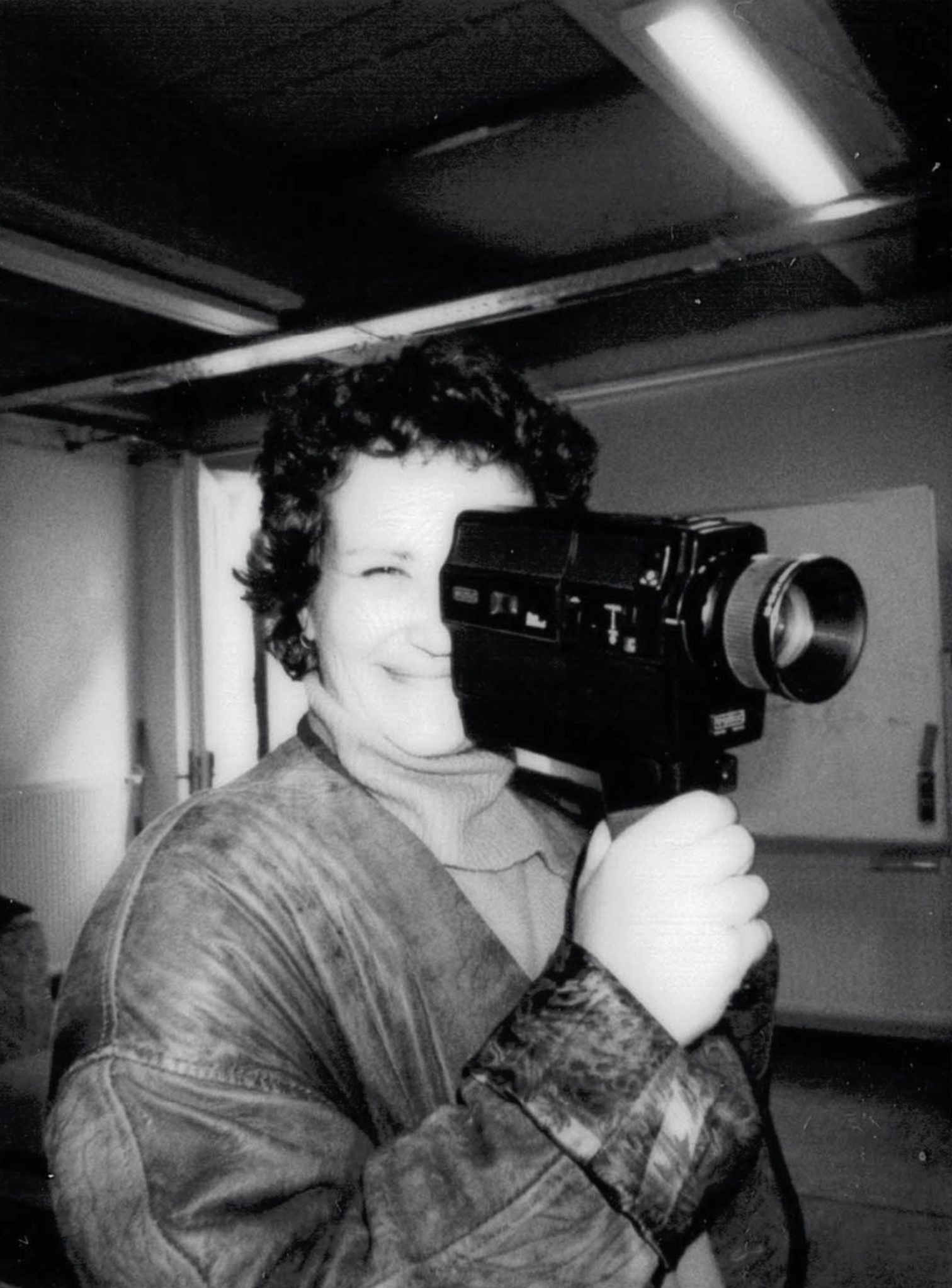
Urška Savič is a photographer, publicist, and radio artist. Her practice explores documentation, archival practices, questions of memory, and the ways images and other forms of recording produce and organise knowledge. She graduated in Photography from FAMU in Prague and received her MA from the Department of Sculpture at the Academy of Fine Arts and Design in Ljubljana, where her research focused on documentation and archiving practices in contemporary art. She is a member of the editorial boards of Fotografija Magazine and ČKZ Journal. From 2019 to 2025, she led R A D A R, an open radio-based artistic-theoretical research platform at Radio Študent. She is an external collaborator at the Department of Photography at ALUO and a freelance contributor to Radio Slovenia – Ars.
Photographic Practitioners

Peter Rauch is an artist, theorist, photographer, and lecturer. He graduated from the Faculty of Architecture at the University of Ljubljana and received his MA in Photography from Central Saint Martins College of Art and Design in London. He is Associate Professor and Head of the Department of Visual Communication Design at the Academy of Fine Arts and Design, University of Ljubljana. He co-founded Kela, an artist-run production space for photography and related practices in Ljubljana.
His artistic practice examines the materiality of built objects, bodies, and the relations that emerge between them, focusing on the narrative field between the photographic document and the construction of the artwork. His theoretical research addresses the concept of the object in relation to subjectivity, with particular attention to the role of negativity, rupture, and fracture across abstract and material contexts. He is also interested in strategies of capturing, processing, and transmitting data across artistic, scientific, and political fields.

Aljaž Lavrič (b. 1999) is a photographer currently pursuing a master’s degree in photography at the Academy of Fine Arts and Design in Ljubljana. He completed his undergraduate studies at the Academy of Arts, University of Nova Gorica, and spent one year in Brussels on an Erasmus exchange at LUCA School of Arts. His work focuses on landscape and terrain as sites shaped by individual and social processes, with attention to photographic method. He presents his projects primarily in the form of photo books and installations and is currently working with diagrams as a visual and epistemic tools.

Peter Koštrun (1979, Ljubljana, Slovenia) is an artist, teacher, photographer and amateur farmer. He graduated at the Academy of Fine Arts and Design Ljubljana, where he works as Associate Professor in the field of Photography for the last 14 years. His research is primarily related to forms of manipulation or deception in photography, focusing on relationship between Science and Art. His work is based on documentary photography and is known for his depiction of empty and eroded landscapes with subtle atmosphere that evokes a feeling of something greater or even immortal. In his recent works he focuses on premonition as contradiction between past, present, and future. He advocates for the development of the individual and his placement in its natural position from which they do not only exist but present benefits to others. In this light, a look into the past is of key importance to him, as it makes it more sustainable for the challenges of the future.
Editors and Research Assistants
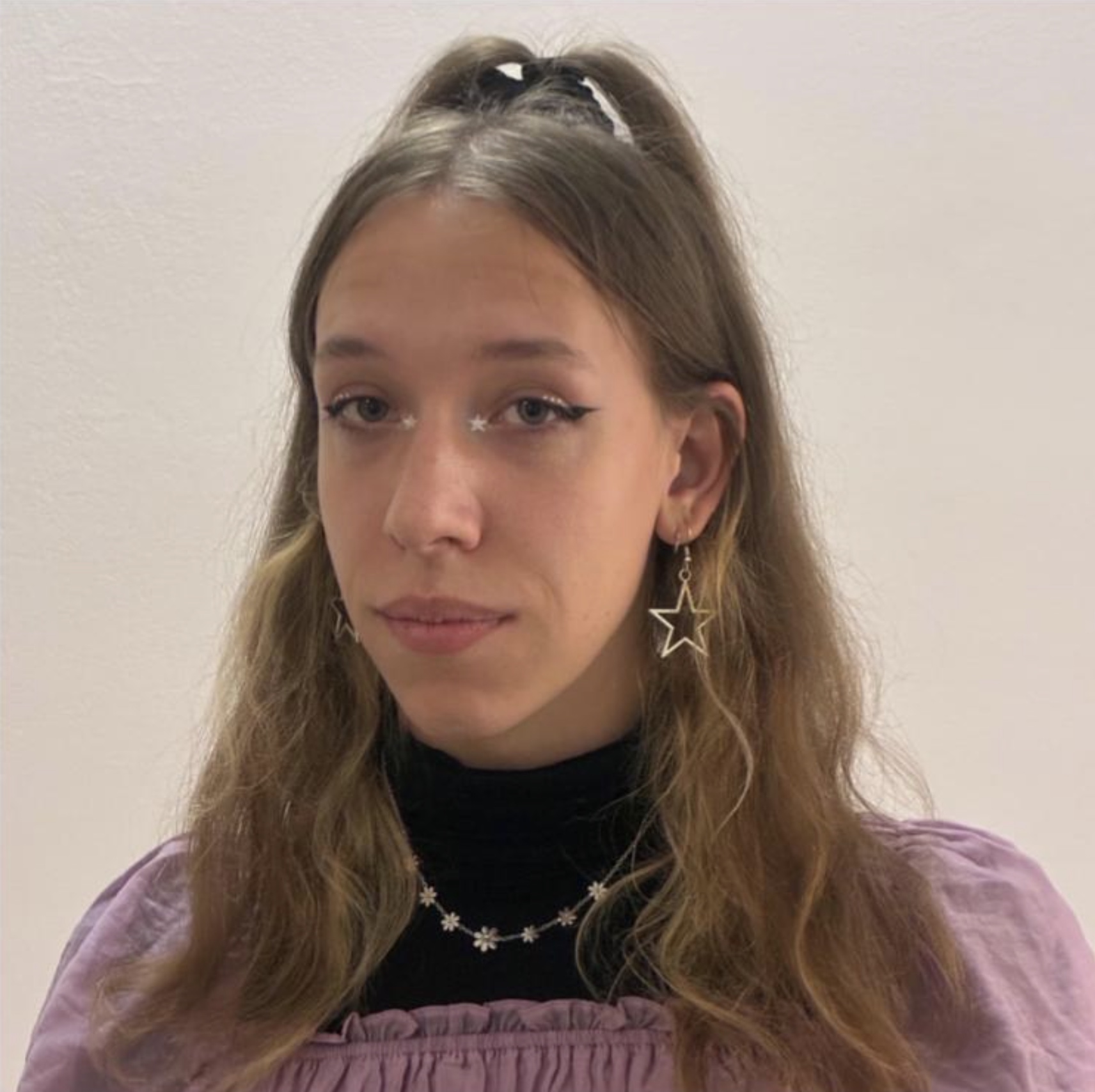
Lea Sande holds a bachelor’s degree in sociology of culture from the Faculty of Arts at the University of Ljubljana. She produces a monthly programme called Povratne zanke (Feedback Loops) on Radio Študent, where she discusses internet theory, culture, and literature. She works in the field of sociology of technology, focusing on the role of computation in contemporary capitalism, the development of artificial intelligence, and the cultural derivatives of emerging technologies. With Aksioma – Institute for Contemporary Art she coedits the book series multithread. She has published in Most, Razpotja and for the Institute of network cultures.

Dunja Rahovsky Šuligoj is a student at the department of Video, Animation and New Media at the Academy of Fine Arts and Design in Ljubljana, where she also completed her bachelor’s degree in painting. During her master’s studies, she attended the Academy of Fine Arts Leipzig as part of the Erasmus exchange program. She primarily works with video and video installations, exploring how different image-making apparatuses produce visibility and invisibility. Working with obsolete and superfluous devices, she is currently interested in how animation and its history develop between culture and technology.
ASTRONOMY AND MACHINE LEARNING CONSULTANTS

Gabriella Contardo is a computer scientist by training who works at the intersection between Machine Learning, data mining, and astrophysics, astronomy and cosmology. She is a SMASH-MSCA fellow at the Center for Astrophysics and Cosmology at the University of Nova Gorica in Slovenia, and a visiting researcher at SISSA in Trieste, Italy. She was a postdoctoral researcher in the data-science group at SISSA from 2022 to 2024, and a Flatiron Research Fellow at the Center for Computational Astrophysics at the Flatiron Institute in New York City from 2018 to 2022. She obtained her PhD in machine learning in 2017 from Sorbonne University in Paris.
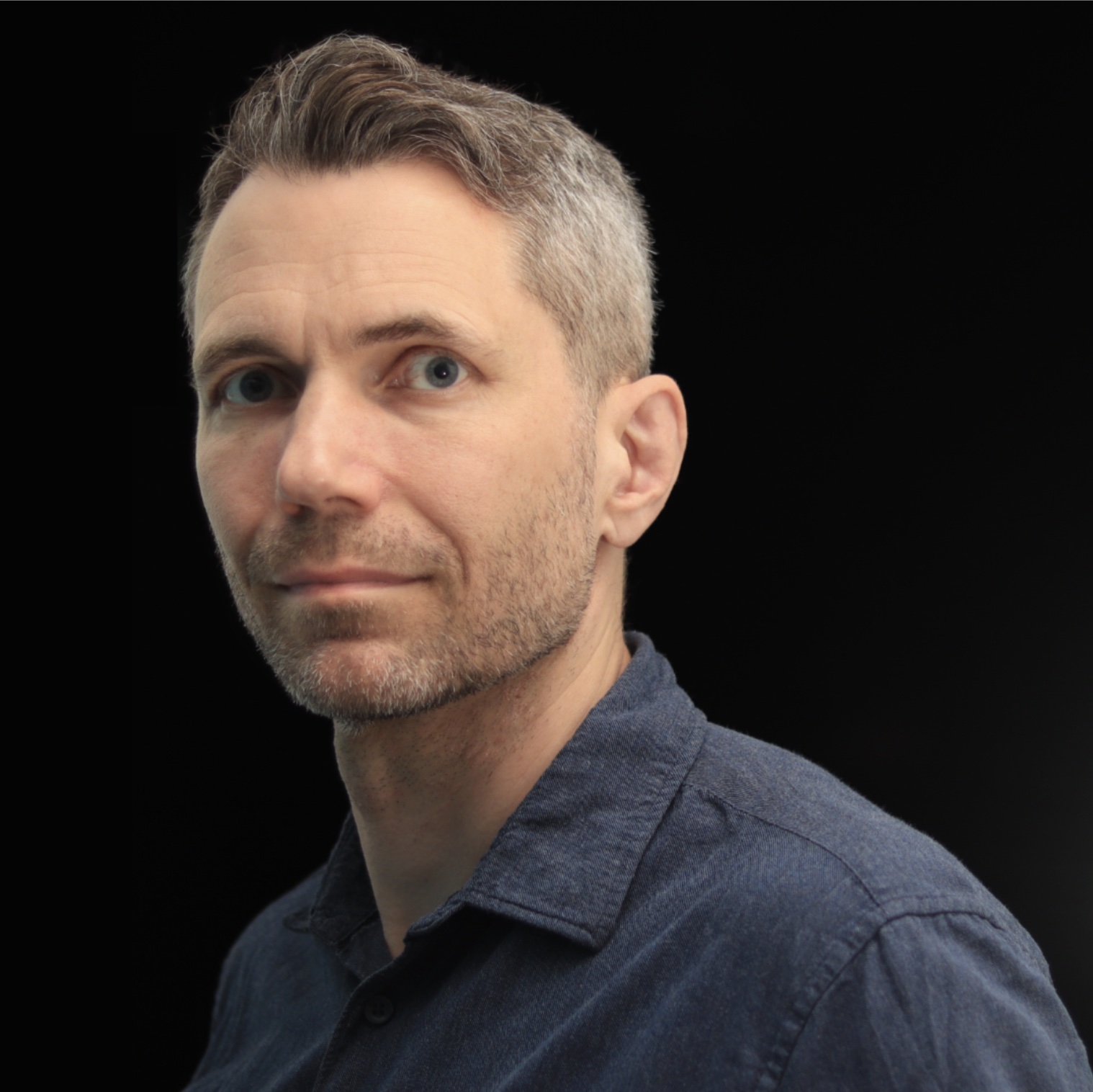
Jonas Enander is a science writer and communicator with a research background in cosmology and astrophysics. He received his PhD from Stockholm University and worked as a postdoctoral researcher at Karlsruhe Institute of Technology before switching career to science outreach. He has worked as a science communicator at the European Southern Observatory and the Oskar Klein Centre and written for media outlets such as New Scientist, Big Think and Live Science. His popular science book Facing Infinity: Black holes and our place on Earth has been published in several countries. He often collaborates with literature festivals, museums and universities for outreach events, with a particular focus on the intersection between science, art and society.