
Archived Events
This page archives our presentations on black holes along with our lecture series that celebrates human curiosity about the phenomena—likely the most fascinating objects in our universe—marking the present as a prominent cultural and historical time we witness together.
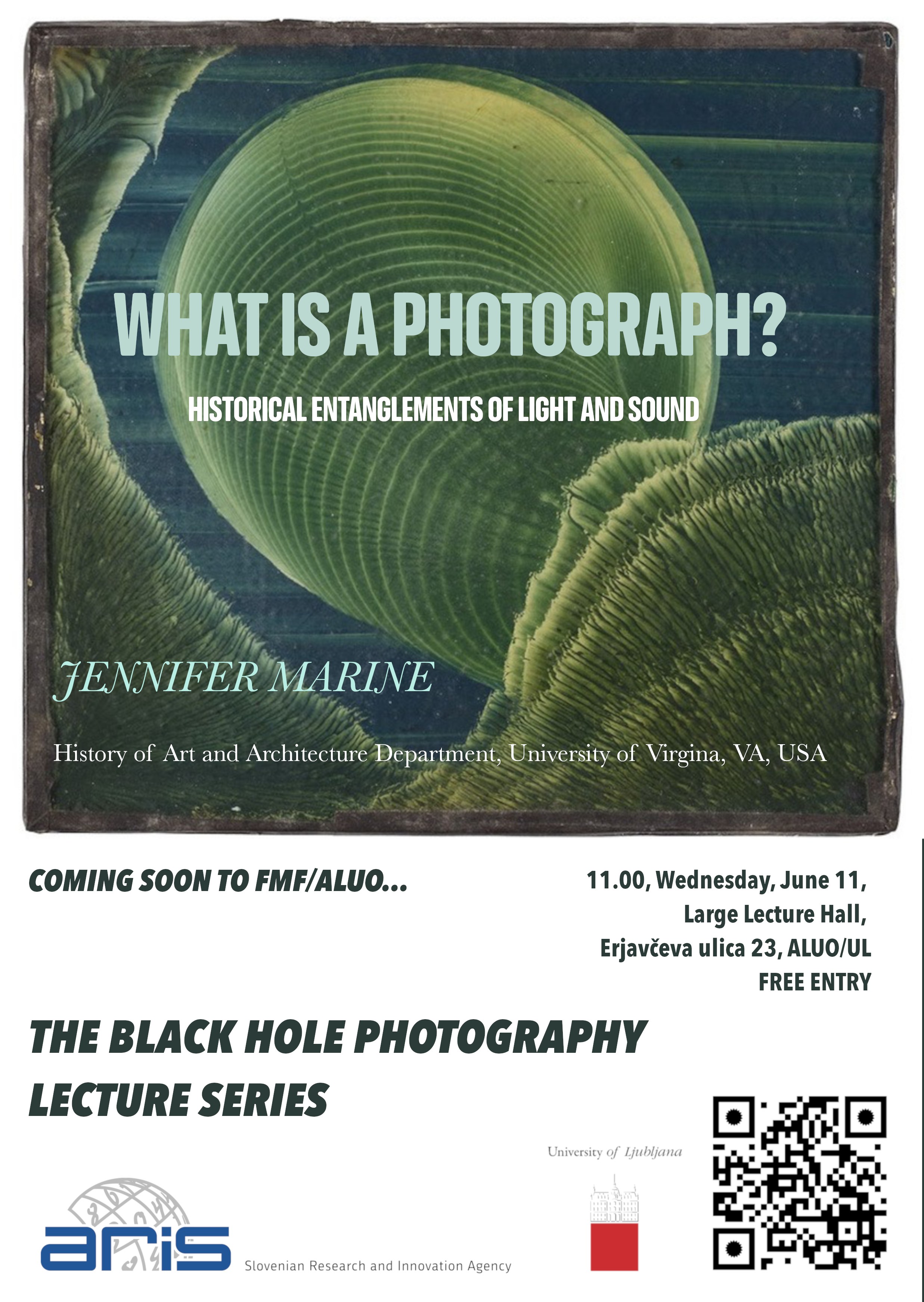
What is a Photograph?
Historical entanglements of light and sound
Our inaugural lecture of the Black Hole Photography Lecture Series started on Wednesday June 11, 2025 Time: 11-12 Location: Large Lecture Hall, Erjavčeva ulica 23., ALUO, Univerza v Ljubljani, Ljubljana 1000
Speaker: Jennifer Marine, MA,
University of Virginia, Art History
“In 2019, astronomers captured the now-iconic image of black hole M87—a photograph unlike any other. Made with no camera or film, how can such an image still be called a photograph?” Join us for a thought-provoking exploration of the fluid boundaries between photography and scientific imaging. This talk traces a fascinating arc from Margaret Watts-Hughes’s “Voice Figures” and Robert Williams Wood’s sound wave photography, to the radio-based imaging of deep space, interrogating the very definition of a photograph. Discover how light and sound have long been entangled in the visual history of science and art—blurring categories, challenging conventions, and reshaping how we see (and hear) the world.
Ljubljana, 11 June, 2025
Photos from the Lecture
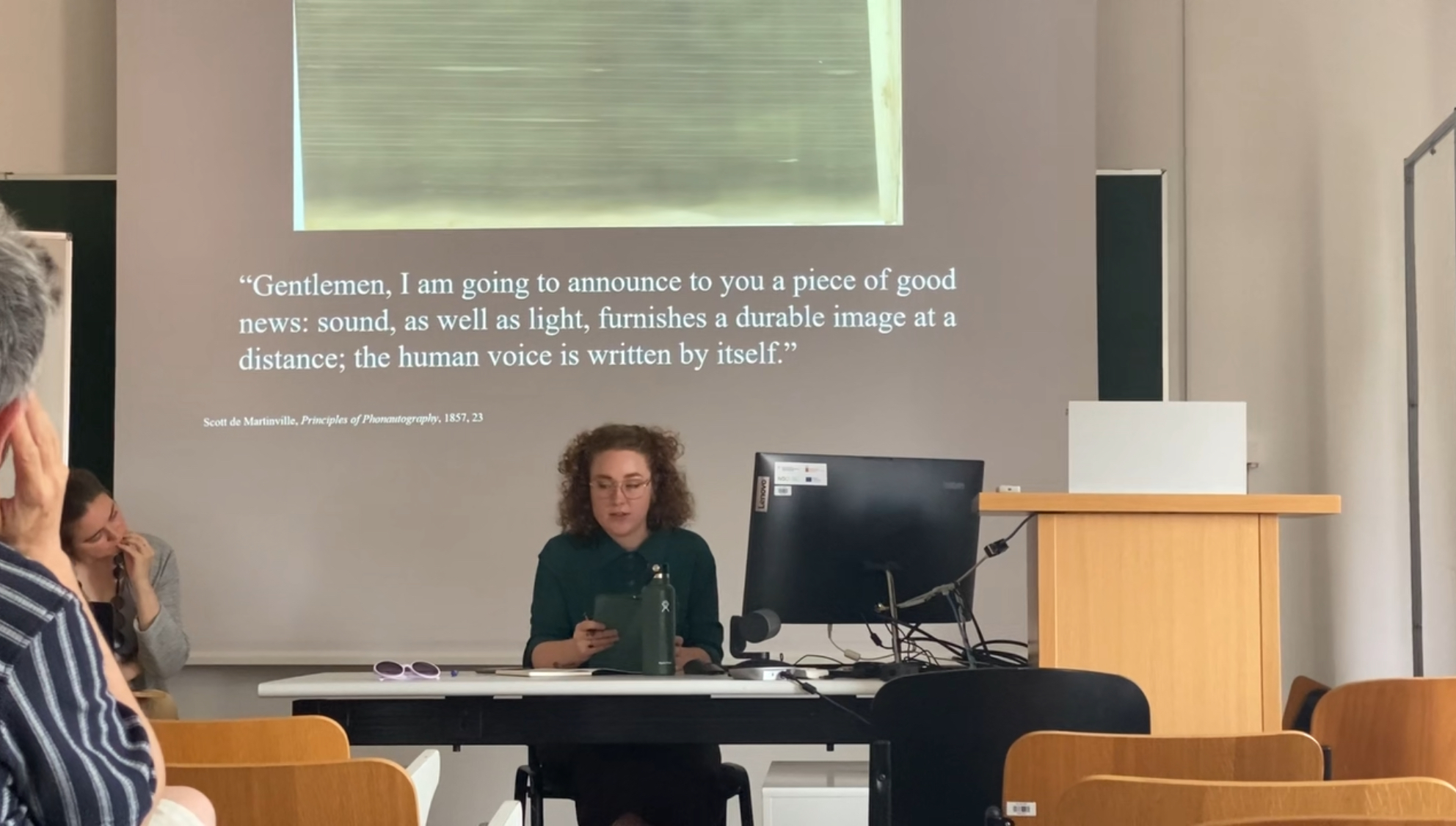
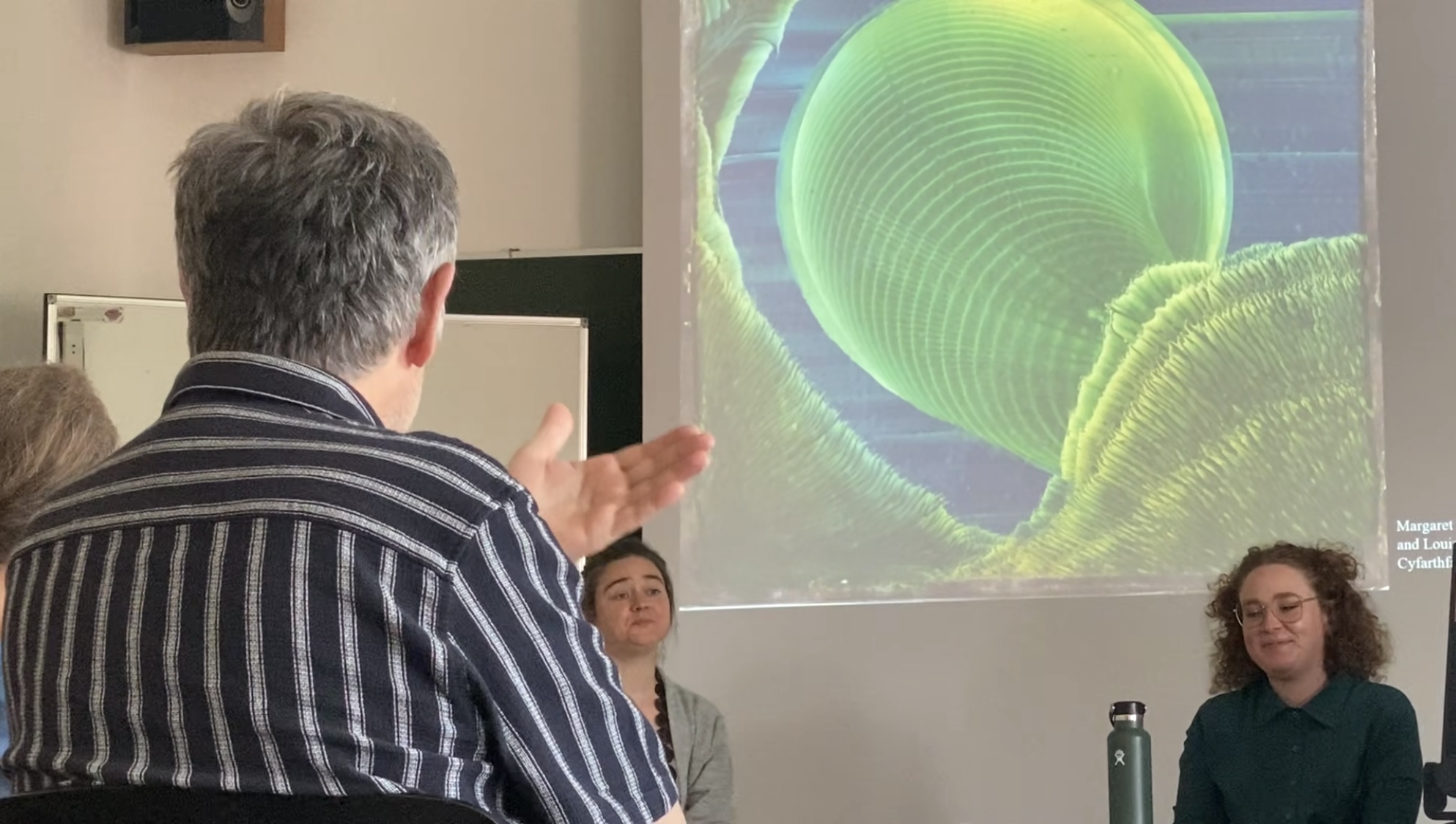
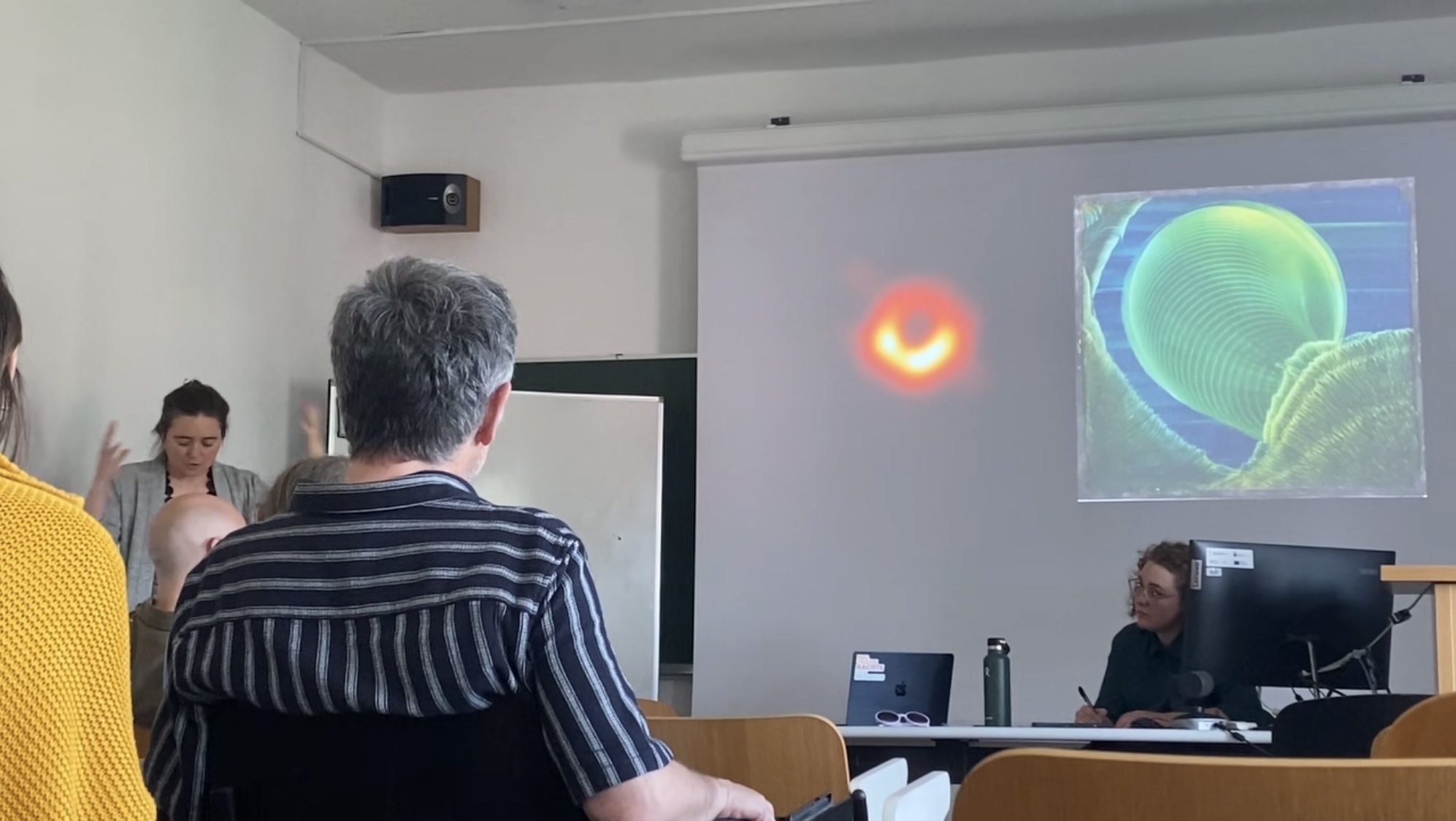
moderated by dr. Eszter Polonyi
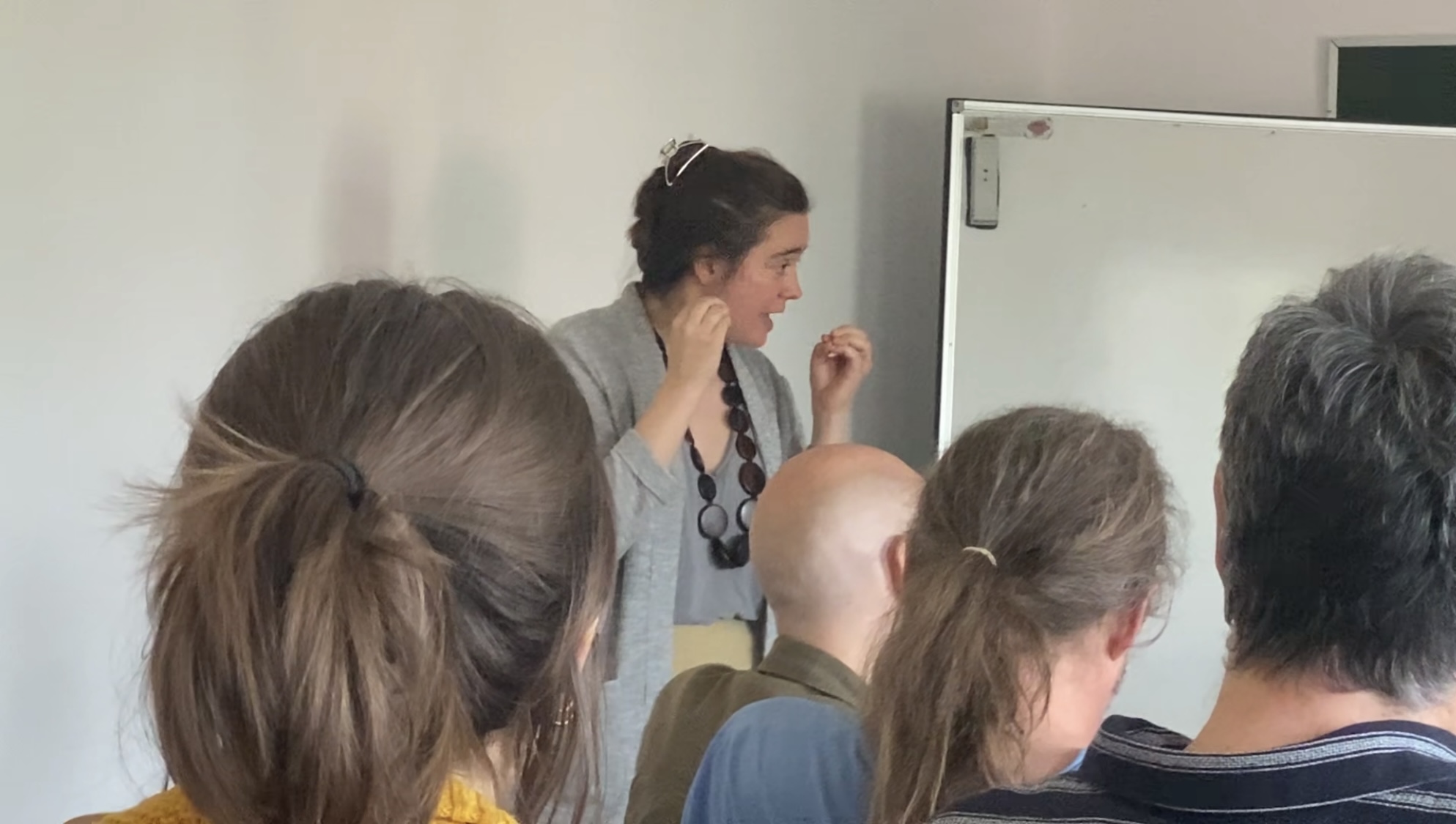
moderated by dr. Eszter Polonyi

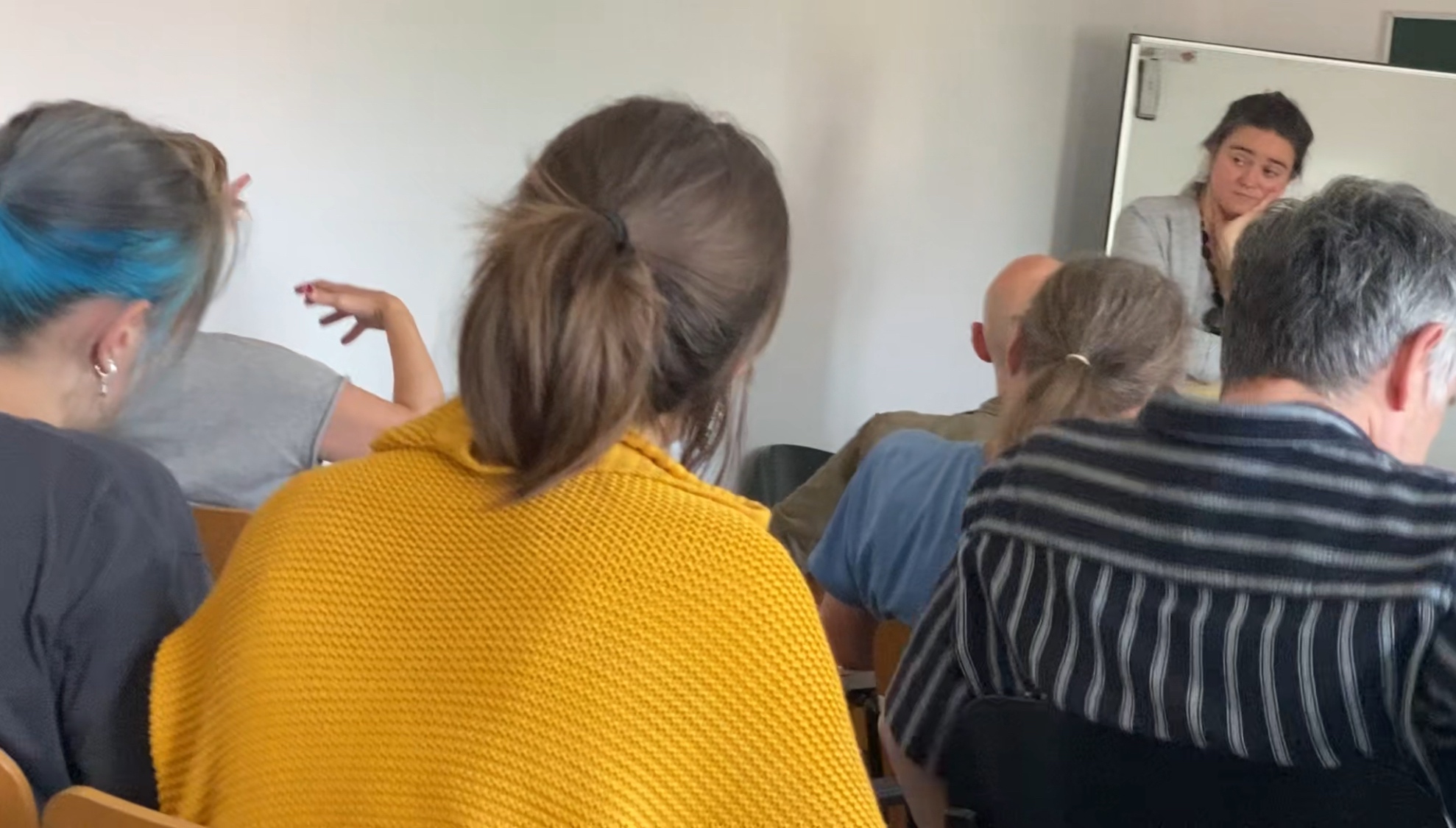
Data Black Holes Versus Data Clouds:
Notes from the Extradate Era
Sreda, 24 september 2025 Time: 12.30–12.50. Location: Avditorij Narodne galerije, Ljubljana 1000 The lecture is part of the Sixth International Scientific Conference of the Department of Theoretical Sciences, UL ALUO
Asist. dr. Eszter Polonyi, UL FMF, UL ALUO, Kunstuniversität Linz
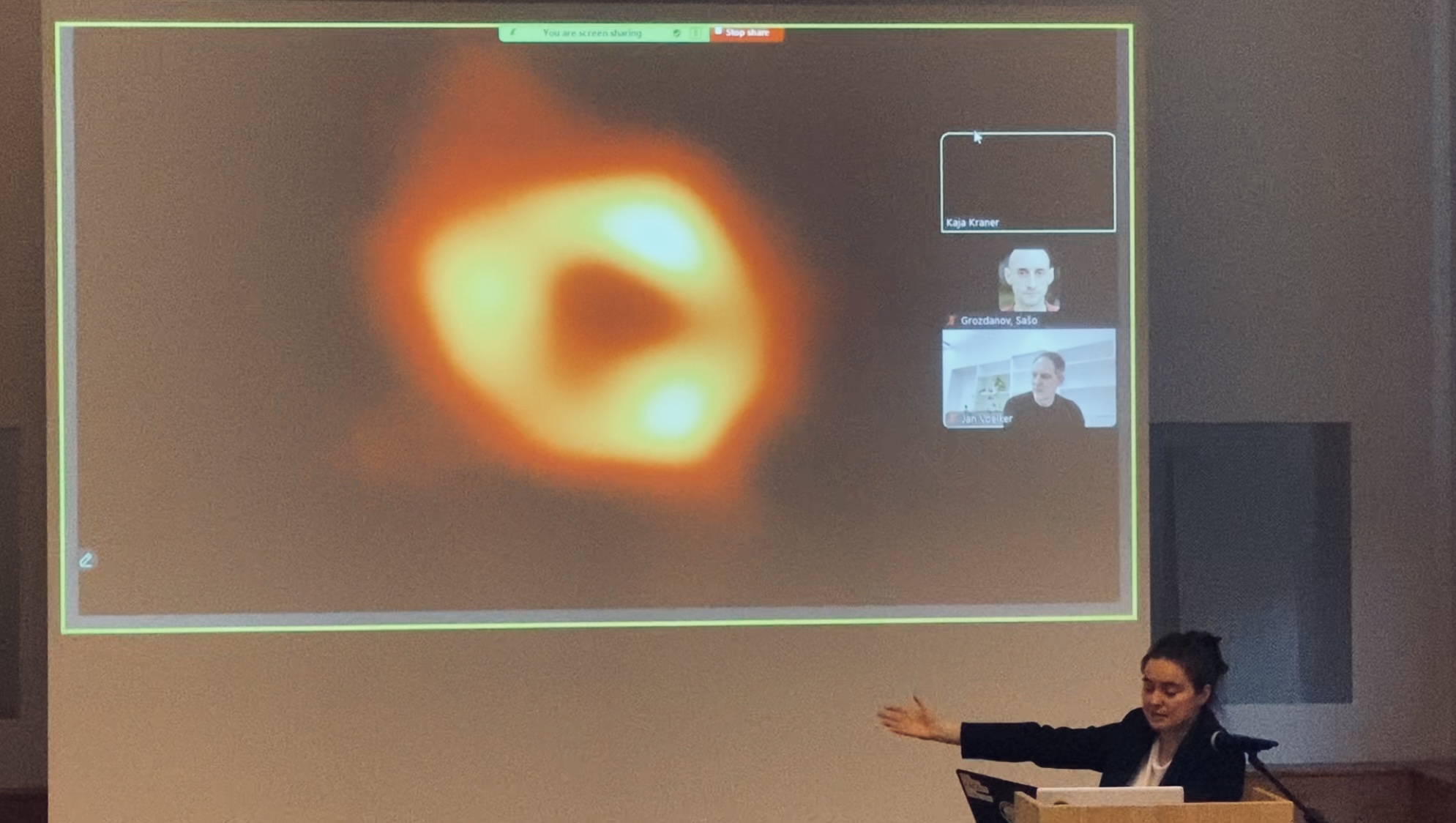
In 2005, two concerned civilians filed a lawsuit to shut down Europe’s Large Hadron Collider (LHC), the world’s largest scientific experiment designed to investigate quantum phenomena such as supersymmetry, extra dimensions, and dark matter. Their complaint was that, running at roughly 7 million times the energy per year of a single high-energy beam circulating within it, the LHC operated at energy levels that risked opening a black hole that would swallow the planet. The case was dismissed in 2008 on the basis of technical rather than scientific terms. Among the reasons given were absurdities to which the lawsuit gave rise within legal procedure, including the difficulty of finding a witness and producing a cost-benefit analysis in which the projected scientific outcomes of the experiment were measured against the future of the entire planet and “life as we know it.” Often referred to colloquially as the “doomsday lawsuit,” this case testifies to a newfound difficulty in adapting technical discourse to the planetary framework of the Anthropocene (Crutzen & Stoermer) within which the human scientific and cultural imagination has been operating over the last century.
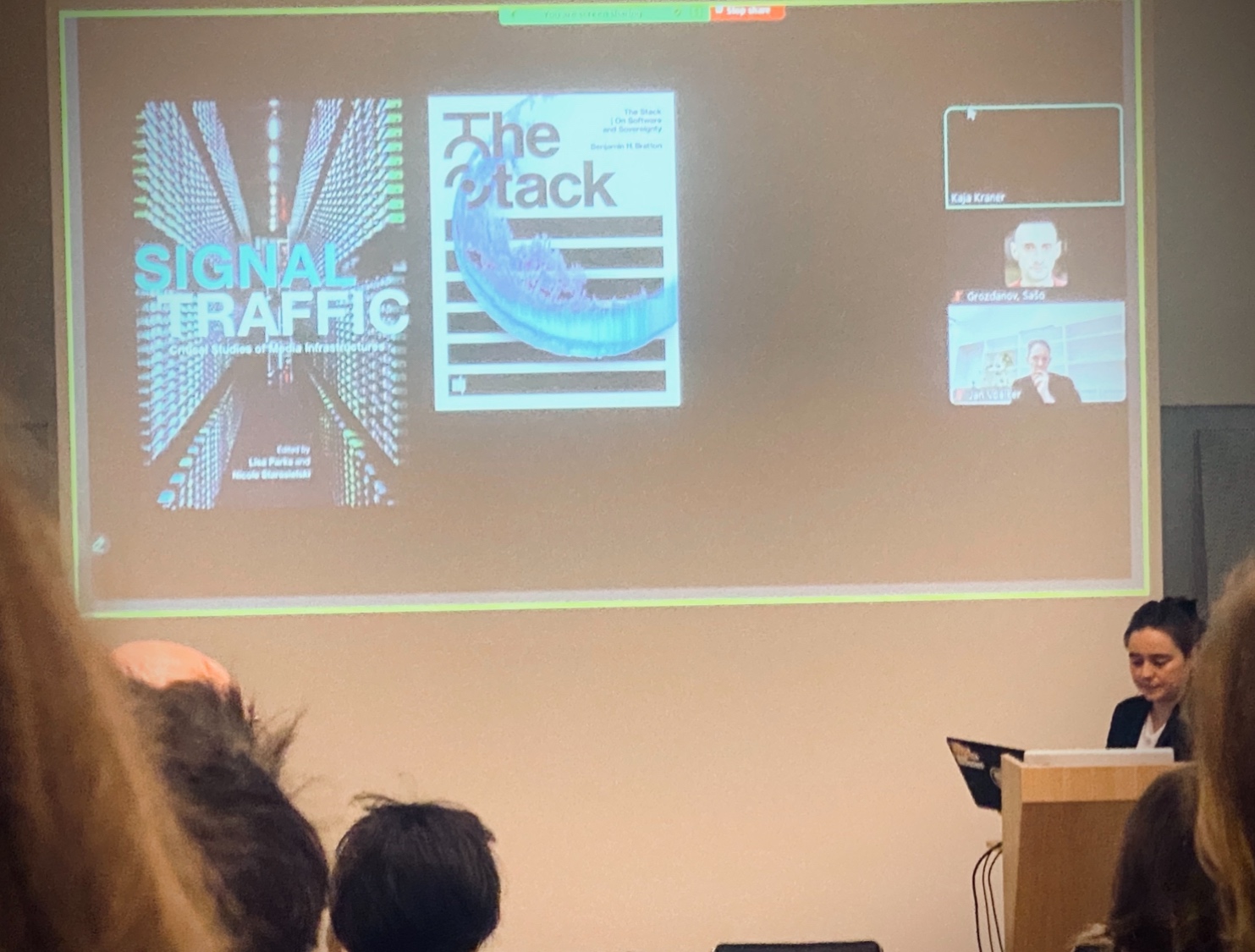
This paper considers the fascination with black holes across technical, scientific and artistic types of imagination as a symptom of cognitive overwhelm at the level of data management (B. Bratton, T. Paglen, Y. Hui). At a time when the artificially intelligent agents collecting, storing, mining, and processing are starting to exceed planetary resources, hungry black holes and other extraplanetary phenomena have taken over from earthbound “clouds” (JD Peters) as metaphors of technical and conceptual expansion. The paper examines the off-world frontiers of data collection of what it calls the “Extradata Era” in contemporary photography and theoretical physics.

Katedre za teoretične vede UL ALUO
Ljubljana, 24 September, 2025
Photos from the Lecture
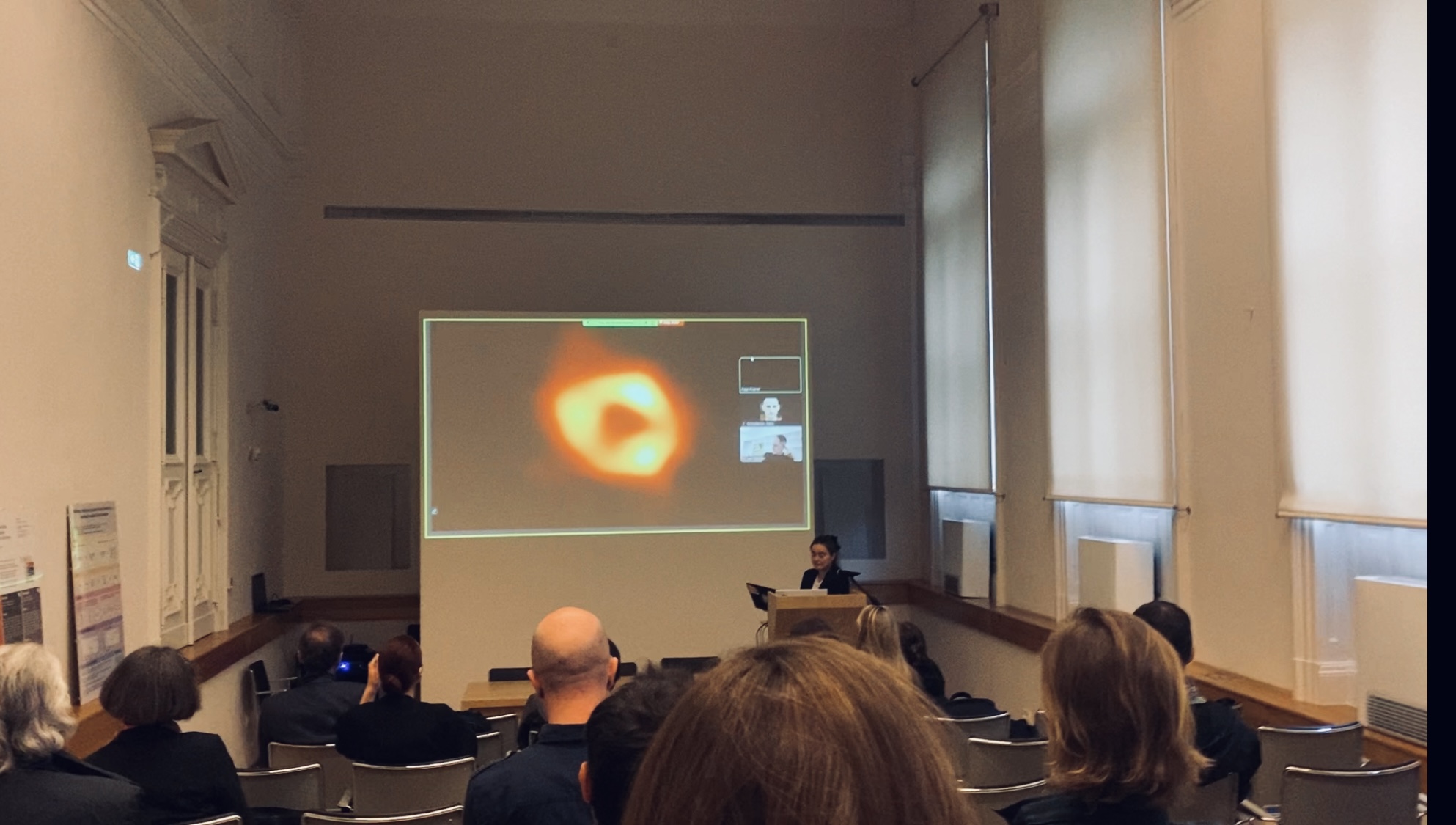
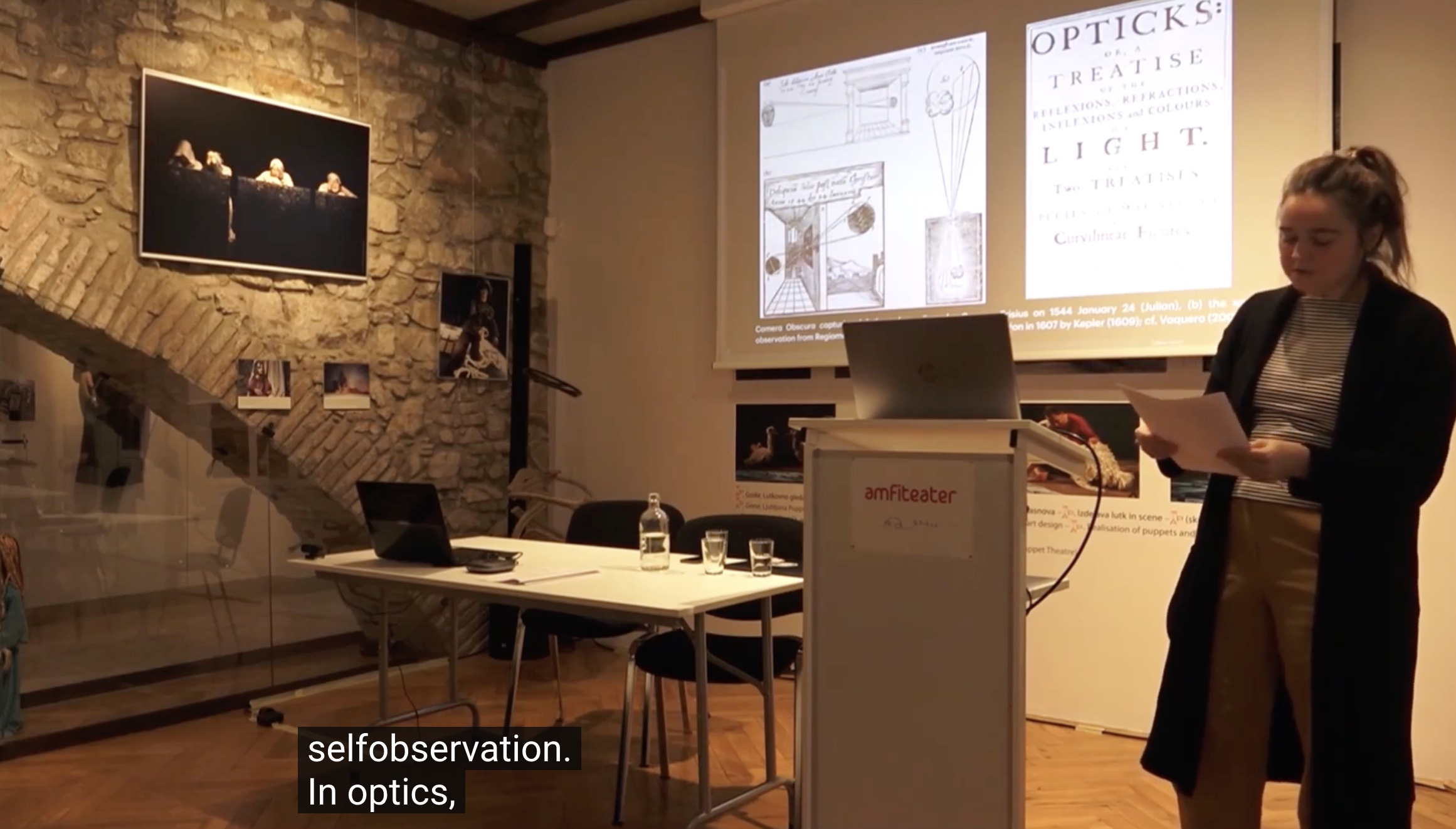
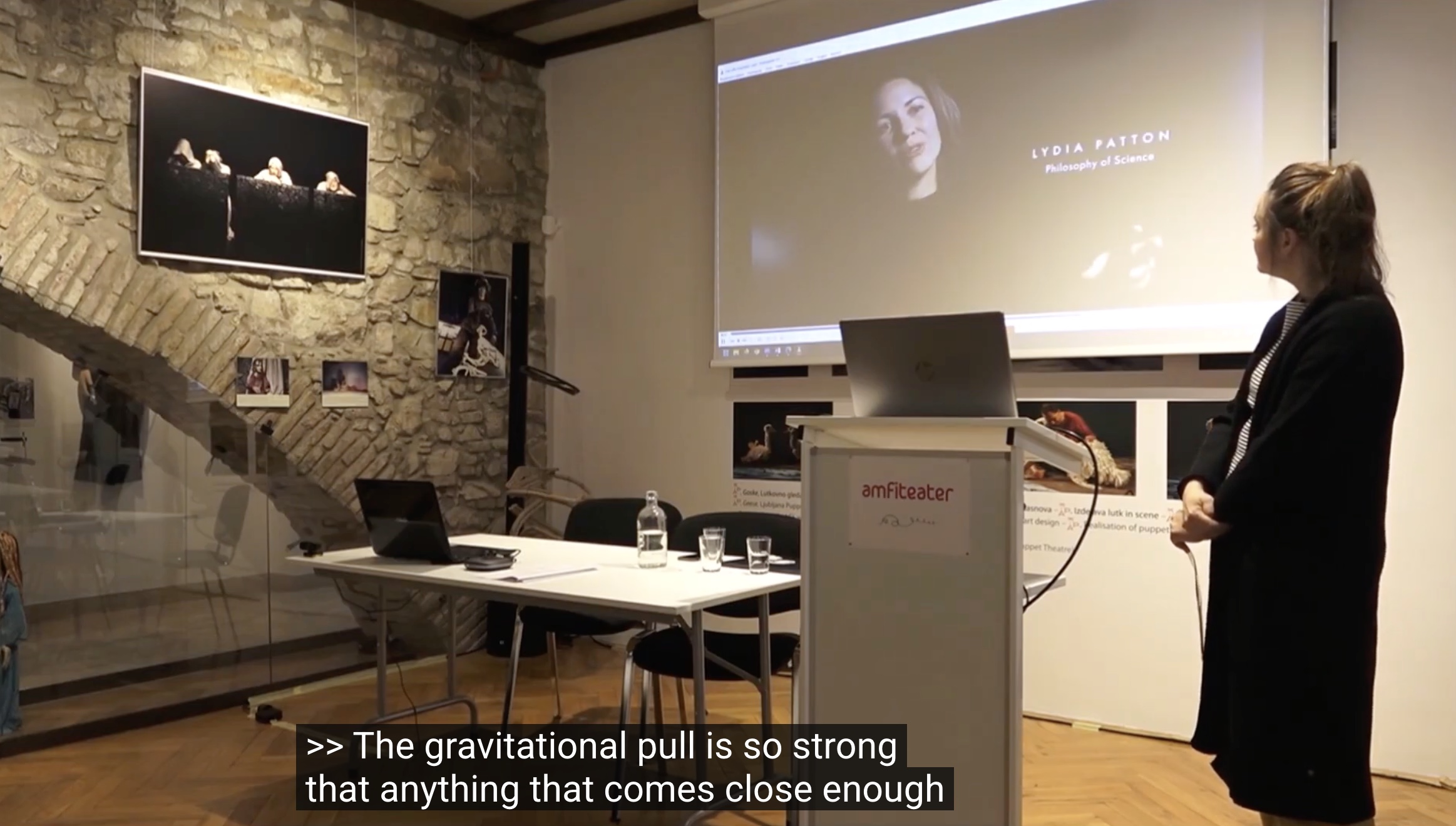
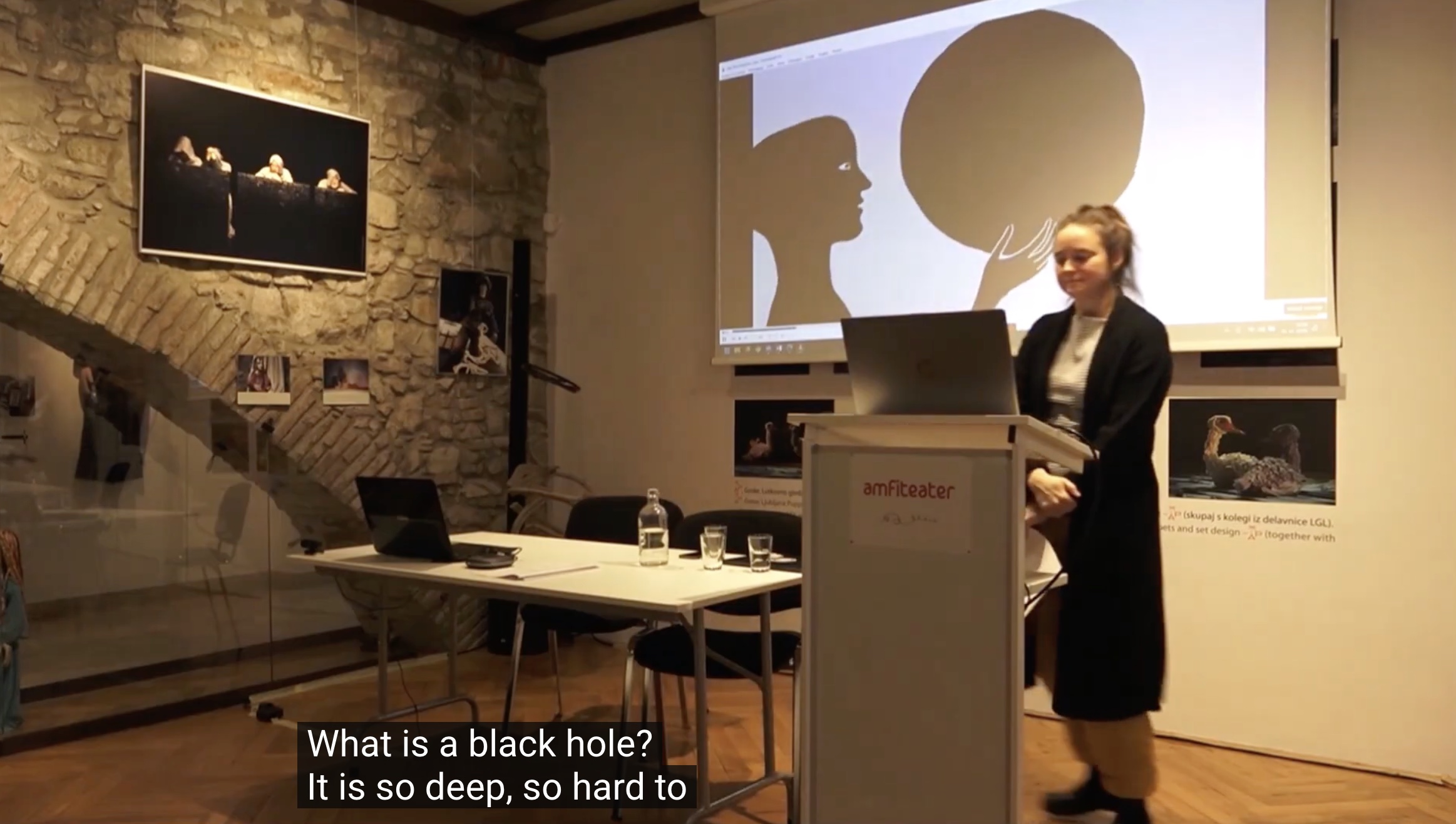
Black holes in the arts and beyond
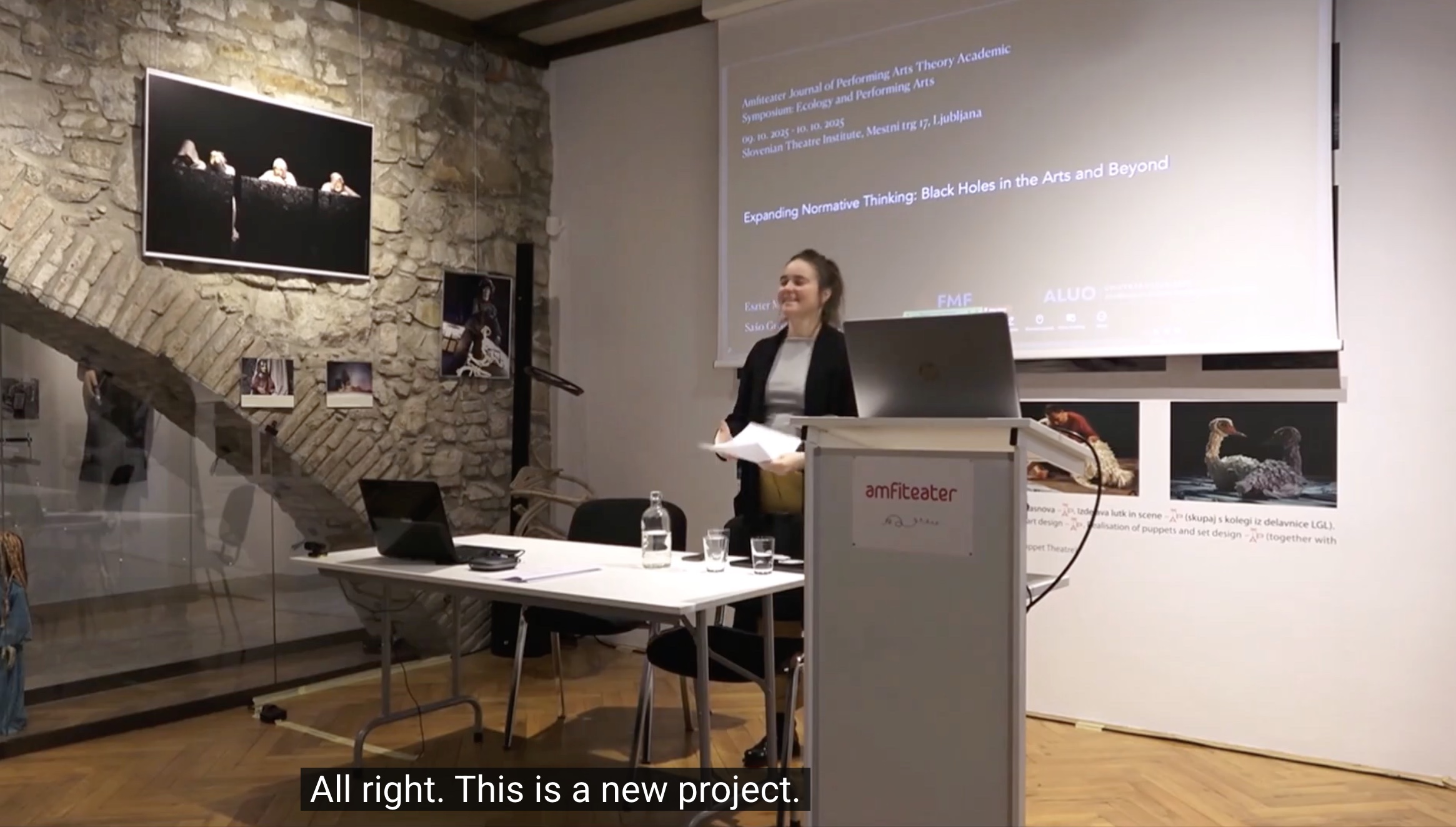
Symposium: Ecology and Performing Arts, Amfiteater Journal of Performing Arts Theory, Slovenian Theatre Institute, Ljubljana, Slovenia, October 9-10
Asist. dr. Eszter Polonyi, UL FMF, UL ALUO, Kunstuniversität Linz
(with Sašo Grozdanov)
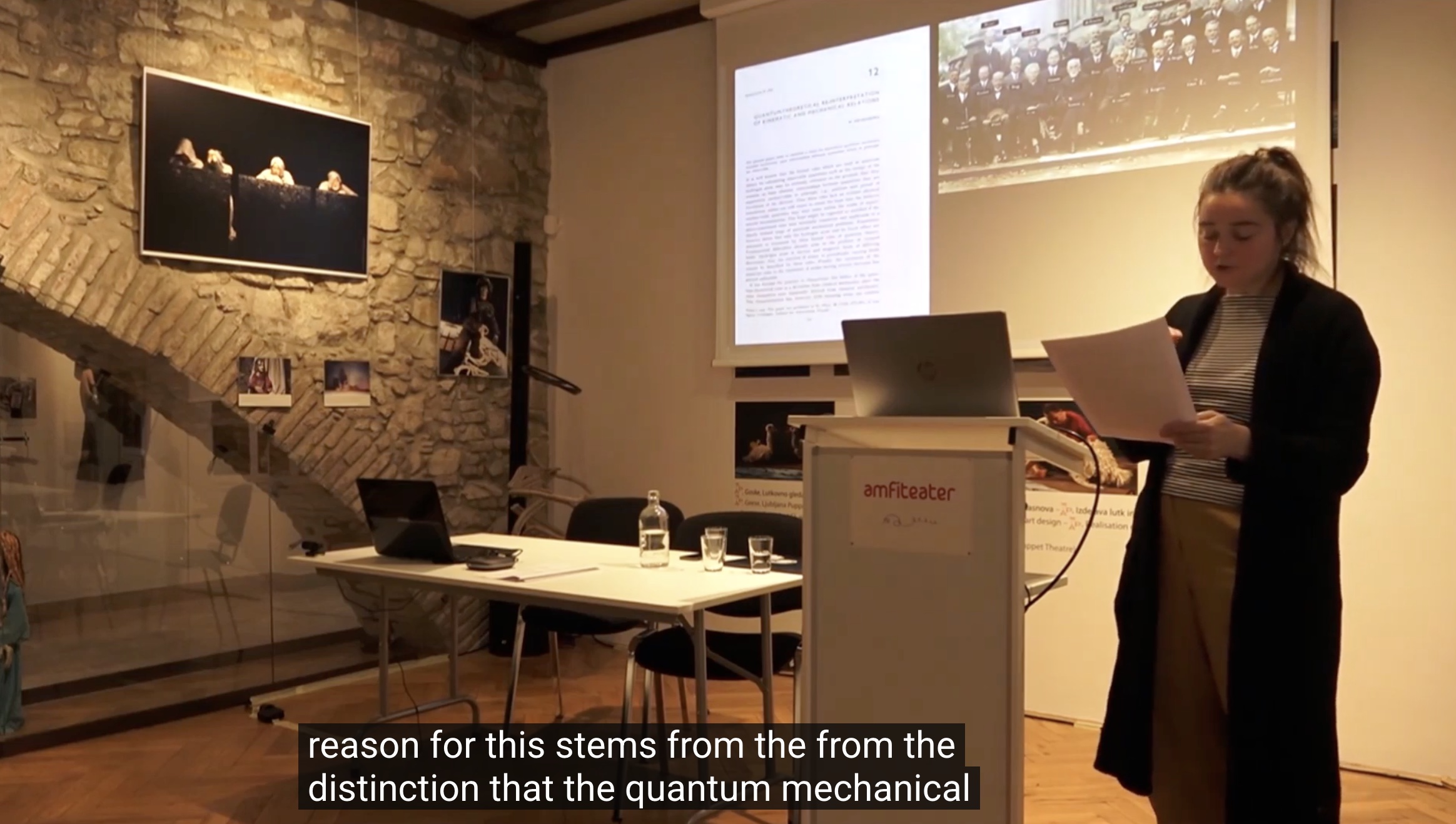
Short abstract: This talk examines how artists, scientists and critical thinkers have sought to radically unsettle normative conceptions of the self and the environment by engaging with the physics of black holes. The talk presents work being done on an interdisciplinary ARIS project being carried out at the Physics and Mathematics Faculty (FMF) and the Academy of Arts (ALUO) at the University of Ljubljana.


Ljubljana, 9-10 October, 2025
Documentation from the Lecture
Black holes, the edge of knowledge, and what is knowable:
Past lessons and future challenges
Location: J19/F1, Faculty of Mathematics and Physics, Jadranska ulica 19, Ljubljana
Date: 17 November 2025, 2:15 p. m.
Speaker: Assoc. Prof. Dr. Sašo Grozdanov
Black holes are probably the most fascinating objects in nature. Their study places us at the frontier between known and unknown physical laws—at the intersection of classical General Relativity, quantum physics, and the still-developing theory of quantum gravity. In the first part of this talk, I will discuss what black holes are, what we currently understand about them, what remains mysterious, and how they fit into the string-theoretic holographic (AdS/CFT) duality, which connects certain theories of quantum gravity to quantum field theories. I will then present some of my past research results that stem from studying black holes and their relation to quantum physics through holography. These include statements about hydrodynamics, many-body localisation, heavy-ion physics, and quantum chaos, all in strongly interacting quantum field theories. Finally, I will outline several foundational open problems in theoretical physics and reflect on the connections between physics, philosophy, and art.


Ljubljana, 17 November, 2025
Documentation from the Lecture


Frequently Asked Questions
What is Physics Meets Photography about?
It is a research project exploring how the visual representation of black holes emerges at the intersection of theoretical physics, imaging technology, and visual culture.
Is this an art or a science project?
Both, and neither exclusively. It is a transdisciplinary inquiry that treats scientific imaging as an aesthetic, epistemic, and technological practice.
What is the purpose of the online representation?
It serves as a reflexive medium—a space where research, visual, and theoretical insights intersect for the purpose of documenting and reflecting on how we collectively witness this moment in science and culture.
Why physics and photography?
Because both are ways of seeing. Physics seeks to understand what cannot be observed directly, and photography makes visible what lies beyond ordinary perception. They reveal how knowledge depends on mediation.
Got questions?
Feel free to reach out.